There is a moment in every serious cook’s life when they realize the most important ingredients in their kitchen are not the most expensive or dramatic. They are the most frequently used. And of everything in the Italian pantry — the dried pastas, the aged cheeses, the preserved tomatoes — nothing is used more frequently, more lovingly, or more revealingly than olive oil.
Aglio e olio — garlic and oil — is the dish that makes this plain. It has five ingredients: pasta, garlic, olive oil, red pepper flakes, parsley. It takes twenty minutes. It is one of the great pasta dishes in the Italian tradition. And the quality of your olive oil determines almost entirely whether it is extraordinary or forgettable.
The Dish and Its Logic
Aglio e olio originated in Naples, though every region of southern Italy claims a version. It is the purest expression of the Italian philosophy that great food begins with great ingredients, minimally handled. No sauce. No cream. No protein. The oil is the sauce — warmed with garlic until it becomes fragrant and golden, then emulsified with a ladle of starchy pasta water into something that clings to every strand of linguine like a glaze.
The dish is, in this way, a test. Use a mediocre olive oil — the kind refined to neutrality, tasting of nothing particular — and you will eat a plate of oily pasta. Use an oil with genuine character — the peppery finish of a Sicilian Nocellara, the grassy herbaceousness of an early-harvest Tuscan, the almond notes of a Ligurian Taggiasca — and the dish transforms into something that tastes of a specific place and tradition.
This is not hyperbole. A truly great extra-virgin olive oil has more flavor compounds than most wines. The difference between a supermarket EVOO and a single-estate, cold-pressed oil from a named harvest is not subtle.
A Brief Argument for a Better Bottle
Most people underspend dramatically on olive oil relative to how central it is to their cooking. A genuinely exceptional single-estate oil costs more than the supermarket version — and lasts just as long. But if you cook with olive oil every day, its quality is the single variable with the most impact on the flavor of everything you make. Drizzle mediocre oil over roasted vegetables and they taste acceptable. Drizzle great oil over the same vegetables and they taste like a decision you made on purpose.
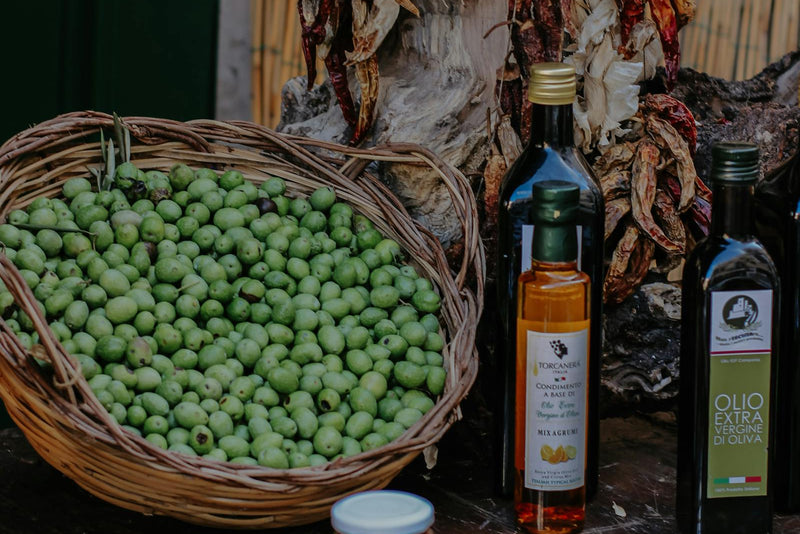
In Sicily — specifically in the Belice Valley in the southwest of the island — some of the world’s most celebrated olive oil is pressed from the Nocellara del Belice variety. The harvest window is narrow: typically two weeks in October, when the olives are still turning from green to black, before they’ve fully ripened. Pressing happens within hours. The resulting oil is intensely green, peppery, with a back-of-the-throat bitterness that Italians call piccante and consider a mark of quality. This is the oil that belongs in aglio e olio. This is the oil that belongs in everything.
The Recipe, Simply
Bring a large pot of well-salted water to a boil. Use more salt than feels appropriate — the water should taste seasoned. Cook 400g of linguine or spaghetti until just short of al dente; it will finish in the pan.
While the pasta cooks, warm six tablespoons of your best olive oil in a large pan over medium-low heat. Add six to eight cloves of garlic, sliced thin. Cook slowly and gently until the garlic is pale golden — not brown, never brown. Brown garlic is bitter garlic, and bitter garlic will ruin everything. Add a generous pinch of dried red pepper flakes. Remove the pan from the heat.
Before draining the pasta, reserve a full ladle of the cooking water — roughly 200ml. Drain the pasta, add it to the pan, and return everything to medium heat. Add the reserved pasta water and toss constantly and vigorously for two to three minutes. The starch will emulsify with the oil into something silky, glossy, and clinging. Add a large handful of roughly chopped flat-leaf parsley. Taste. Add salt if needed.
Finish with another thread of olive oil — raw, uncooked, which preserves its flavor in a way that heat-exposed oil cannot. Serve immediately in warm bowls with good bread to finish the oil at the bottom. No Parmesan. This is Naples; the Neapolitans will tell you this firmly.
What Else a Great Olive Oil Does
Beyond aglio e olio, an exceptional extra-virgin olive oil earns its place in these ways: drizzled over white beans with rosemary. Poured over fresh burrata before anyone puts a fork to it. Used as the finishing drizzle over a bowl of ribollita or minestrone. Whisked with good wine vinegar into a vinaigrette for bitter greens. Poured into a small dish beside good bread, with sea salt and nothing else.
It is the ingredient that reveals everything. Get the oil right, and a great deal else follows naturally.